Lithium battery disposal has become a growing challenge across the UK healthcare sector. As medical devices increasingly rely on lithium-powered technology, hospitals and clinics are under pressure to ensure lithium battery waste is managed safely, legally and sustainably.
Recently, Cellcycle completed its first operational collection of lithium primary batteries from Ideal Medical Solutions, marking a major milestone for lithium battery recycling in healthcare.
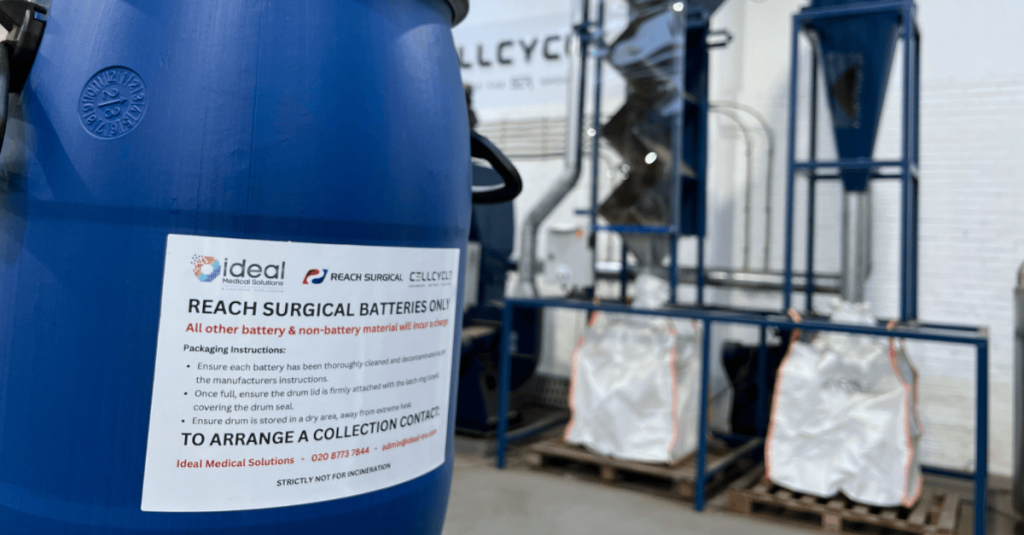
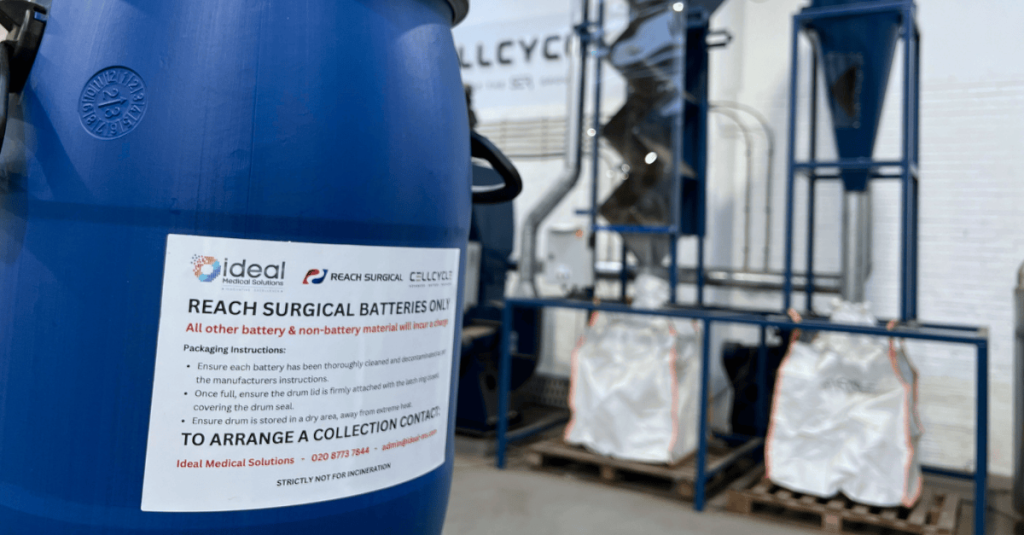
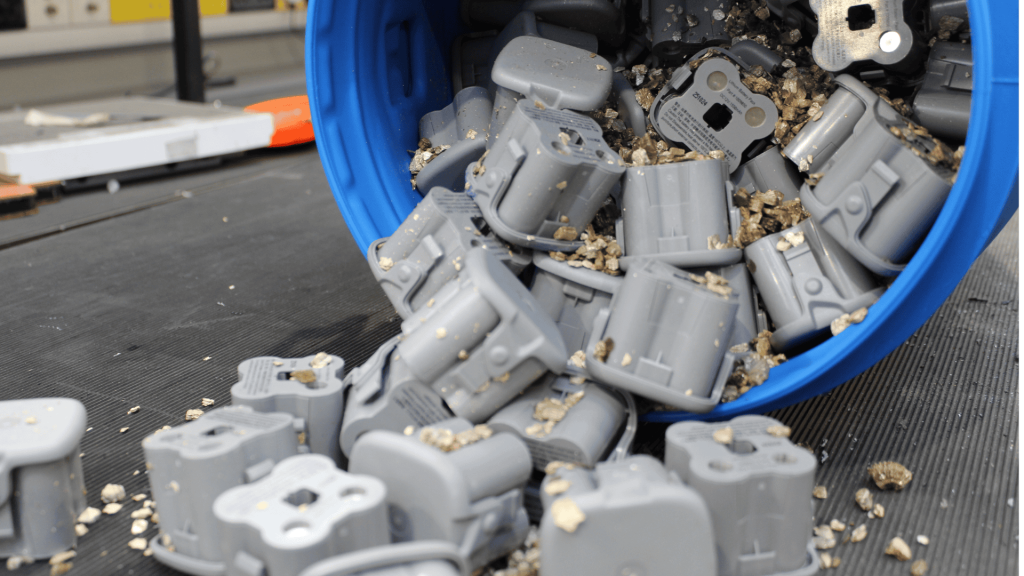
The collection involved lithium batteries removed from powered surgical staplers used during hospital operations. Although the initial volume was one UN-approved barrel, this event represents a critical step forward for compliant battery recycling in the medical sector.
The Hidden Problem with Lithium Battery Disposal in Hospitals
For many years, lithium battery disposal within healthcare environments was poorly understood. Lithium primary batteries embedded within medical devices were routinely discarded alongside general clinical waste such as bandages, masks and surgical gloves. These mixed waste streams were commonly sent for incineration or landfill.
This practice was not intentional wrongdoing. Instead, it reflected a lack of available lithium battery recycling routes for medical devices. Hospitals, clinics and medical suppliers had no specialist option for managing lithium primary batteries safely once equipment reached end of life.
Today, this approach is no longer permitted. UK legislation makes it illegal to incinerate or landfill lithium batteries due to their fire risk, environmental impact and regulatory status. Healthcare organisations are now required to segregate and manage lithium battery waste correctly, yet many continue to struggle to find a compliant solution.
Why Lithium Battery Recycling Is Different in Healthcare
Lithium batteries used in medical devices are not the same as consumer batteries. Powered surgical staplers, for example, rely on lithium primary batteries to deliver consistent, high-performance power during surgical procedures.
Once removed from service, these batteries present a serious risk if mishandled. Improper lithium battery disposal can lead to fires during storage, transport or waste processing. It can also cause environmental pollution if battery materials enter landfill or incineration systems.
Despite these risks, until recently there was no complete lithium battery recycling route designed specifically for the healthcare sector.
A New Battery Recycling Route for Medical Devices
To address this gap, Cellcycle partnered with Ideal Medical Solutions to establish a dedicated recycling route for lithium primary batteries generated from medical equipment.
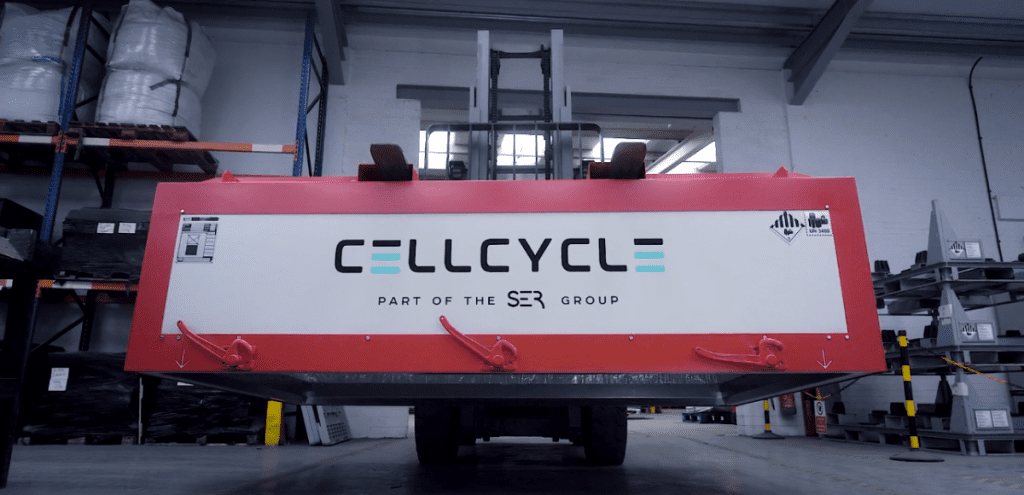
Under this partnership, Cellcycle provides a compliant, end-to-end service covering the segregation, collection, transport and recycling of lithium batteries from healthcare settings. This ensures that lithium battery disposal is handled in line with UK waste regulations and dangerous goods requirements.
The first collection focused on lithium primary batteries removed from powered surgical staplers used in hospitals. These batteries were securely stored in UN-approved containers, transported under compliant conditions and directed into specialist lithium battery recycling processes.
While the initial collection consisted of a single barrel, it represents the transition from theory to action. Further collections are already expected as awareness grows and more devices are captured within the recycling programme.
Supporting Compliance and Sustainability
Correct lithium battery disposal is now a compliance requirement, not an option. UK regulations require lithium batteries to be segregated from general waste and processed through approved recycling routes rather than incineration or landfill.
By working with Cellcycle, organisations like Ideal Medical Solutions can confidently demonstrate compliance while reducing safety and environmental risk. At the same time, lithium battery recycling supports wider sustainability goals by recovering valuable materials and reducing reliance on virgin resources.
This approach transforms battery recycling from a regulatory burden into a practical, responsible solution for healthcare organisations
The Future of Lithium Battery Recycling in Healthcare
The successful first collection marks an important step in redefining how lithium battery disposal is managed within the healthcare sector. Although volumes are currently small, the pathway is now established and scalable.
As more hospitals, clinics and medical suppliers adopt compliant battery recycling practices, collection volumes are expected to increase significantly. Cellcycle is committed to expanding this route and supporting the healthcare sector with a clear, safe and sustainable lithium battery recycling solution.
For organisations seeking a compliant approach to lithium battery disposal and battery recycling in healthcare, this marks the beginning of a new standard.