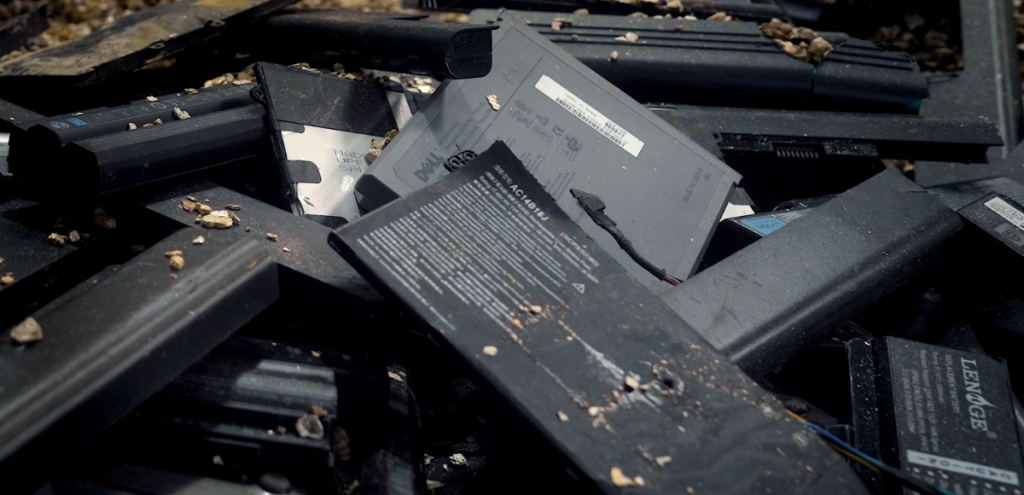
Laptops, mobile phones and similar portable devices are central to everyday business. Inside each one is a lithium-ion battery, and the value of both the device and that battery does not end when the original user no longer needs them. A retired laptop is often still a capable machine, with a battery that still holds useful life.
That creates a decision every organisation refreshing its IT estate has to make: what happens to those devices, and the batteries inside them, next. The instinct is often to recycle. But for a device that still works, recycling is rarely the best first step. Reuse is.
The best way to reuse a lithium ion battery is to keep its device in service
There is a simple point that often gets missed in conversations about battery sustainability. The most efficient way to reuse a lithium ion battery is not to remove it, test it and redeploy it on its own. It is to keep the working device it already sits in, in service for longer.
When a laptop is refurbished and returned to use, its lithium-ion battery is reused along with it, in the application it was designed for, with no dismantling and no material recovery required. The whole device gets a second life, and the battery’s second life comes as part of that. This is more sustainable than recycling, because it keeps functioning technology in service and delays the point at which any materials need to be recovered at all.
This is the waste hierarchy applied to IT. Recycling is valuable and necessary, but it is still an intervention that consumes energy to break a product down. A device that is refurbished and redeployed avoids that step for another full lifecycle. Reuse is the more resource-efficient choice precisely because it does less, and it should come first wherever a device is still fit for service.
SE Remarketing: extending the life of devices and their batteries
This principle sits at the heart of how the SER Group approaches the technology lifecycle, and it is built into how the Group is structured.
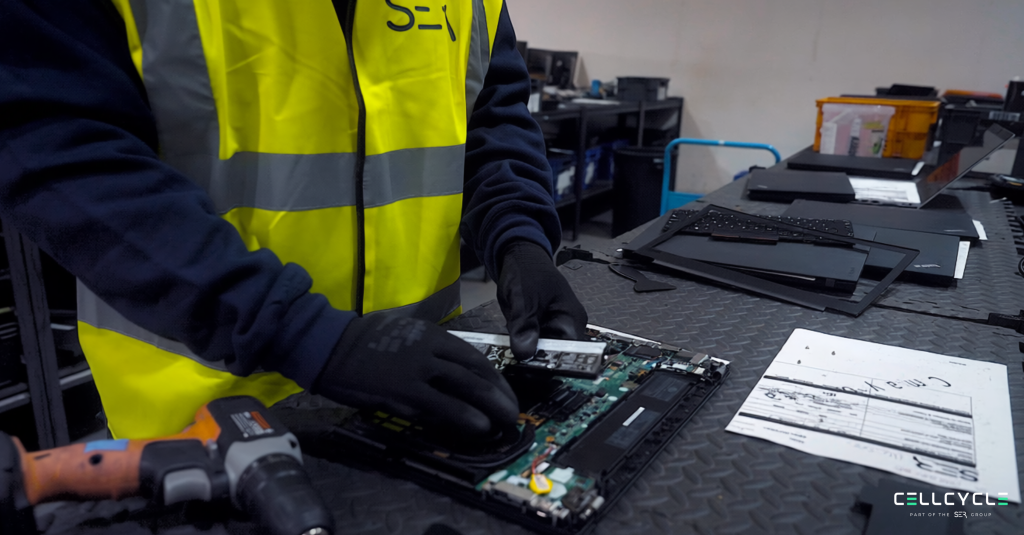
The SER Group’s sister division, SE Remarketing, specialises in refurbishing IT devices. Suitable laptops are assessed, refurbished and returned to use, which keeps both the device and the lithium-ion battery inside it in service for a second life rather than being broken down prematurely. In practical terms, refurbishing the device is what allows the battery to be properly reused: the two stay together, and a machine that still has useful life is returned to circulation instead of being treated as waste.
For an organisation, this is also where the value sits. A retired but serviceable device retains real worth, and returning it to use recovers that worth while reducing unnecessary waste and supporting resource efficiency. The aim is to exhaust a device’s useful life, and its battery’s useful life, before either is ever considered for recycling.
Cellcycle: compliant recycling at genuine end-of-life
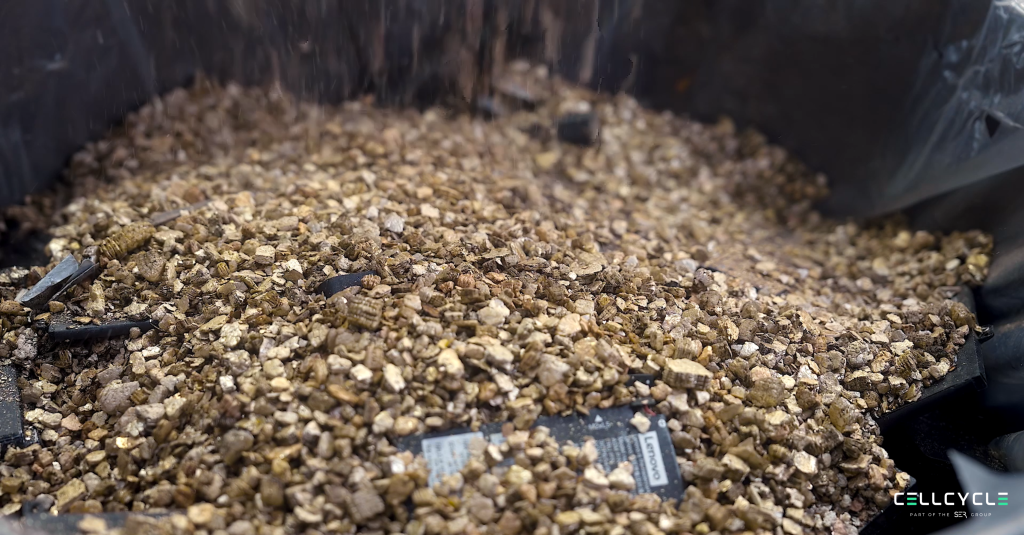
Reuse cannot continue indefinitely. A battery degrades, a device eventually fails or becomes genuinely obsolete, and at that point reuse is no longer the responsible option. This is the stage where recycling is the correct answer rather than a premature one.
When a lithium-ion battery reaches its true end-of-life, Cellcycle provides the compliant route to recycle lithium-ion batteries safely and responsibly. As the SER Group’s dedicated battery-recycling division, Cellcycle holds Environment Agency approvals as an Approved Battery Treatment Operator, Approved Battery Exporter and Approved Authorised Treatment Facility, and operates ADR-compliant collection supported by an in-house Dangerous Goods Safety Adviser. Batteries are handled, transported and treated through a licensed, documented process from collection through to recovery.
The distinction between the two divisions is the condition of the asset. While a device and its battery are still serviceable, SE Remarketing keeps them in use. Once the battery has genuinely reached end-of-life, Cellcycle ensures it is recycled compliantly rather than ending up in general waste, where lithium-ion batteries pose a fire risk and the legal obligation goes unmet.
Reuse and recycling under one roof
The practical advantage for an organisation is that the reuse-or-recycle decision does not require two unconnected suppliers. A retired fleet of laptops can be handled as a whole. The devices fit for further service are refurbished and returned to circulation through SE Remarketing, keeping their batteries in use. The devices and batteries that have genuinely reached end-of-life are routed to Cellcycle for compliant recycling, with the documentation that end-of-life lithium-ion battery treatment requires.
This joined-up approach allows the SER Group to support IT reuse, WEEE recycling, battery reuse, and end-of-life lithium battery recycling under one roof. Reuse is prioritised wherever a device is still fit for service, and compliant recycling is provided at the point where it genuinely is not. It means nothing serviceable is broken down before it needs to be, and nothing at end-of-life is left without a compliant route.
To discuss IT device reuse, WEEE recycling and compliant lithium-ion battery recycling for your organisation, find out more at cellcycle.co.uk.