Most lithium battery disposal is routine. A battery reaches end of life, it is collected on a schedule, transported and treated. The process is predictable because the material is stable.
Some batteries are not stable. They arrive thermally compromised, physically damaged, swollen, leaking, or already presenting an active safety risk. For this category, ordinary collection does not apply, and treating it as though it does is where the real danger begins. Handling a damaged lithium battery is a different discipline from standard collection, and the regulations treat it differently too.
Why damaged batteries are a separate problem
A lithium battery in good condition holds its energy safely. A damaged one may not. Mechanical damage, internal faults or exposure to heat can trigger thermal runaway, a self-sustaining reaction that is difficult to stop once it starts.
The scale of the consequences is visible in the UK waste system, where batteries that should have gone through proper disposal instead end up crushed in the general waste stream. The National Fire Chiefs Council reported more than 1,200 battery fires in bin lorries and at waste sites in a single year, a 71% increase on the 700 recorded in 2022.
The NFCC’s own description of the hazard is worth keeping in mind, because it explains why these incidents are so hard to manage: lithium battery fires can be explosive, spread rapidly, carry a risk of reignition, and release toxic gases. A damaged battery is not a problem that waits politely for the next scheduled collection.
The lesson for any organisation holding battery assets is straightforward. The moment a battery is identified as damaged or unsafe, it has moved outside the routine disposal process and into one that has to account for that risk from the first point of contact.
What the regulations require
Damaged lithium battery disposal is not left to discretion. The transport of damaged and defective lithium batteries is governed by international dangerous goods regulation, specifically Special Provision 376 of ADR, the European agreement that sets the rules for carrying dangerous goods by road.
Under SP 376, a cell or battery identified as damaged or defective must be assessed, packaged to a defined standard, and the packages marked “DAMAGED/DEFECTIVE LITHIUM-ION BATTERIES”, with the transport document carrying a statement that the consignment moves in accordance with the special provision. Batteries judged liable to react dangerously, produce a flame or vent hazardous gases under normal transport conditions face stricter conditions still, and may only be carried with the approval of the competent authority.
In practical terms, this means three things have to be in place before a damaged battery can be moved compliantly: a competent assessment of the battery’s condition, the correct dangerous-goods packaging, and a vehicle and operation approved to carry the material. A standard waste collection meets none of these requirements. This is why a damaged battery cannot simply be added to a normal disposal run, and why the right partner for this work looks different from a general waste contractor.
What compliant handling looks like in practice
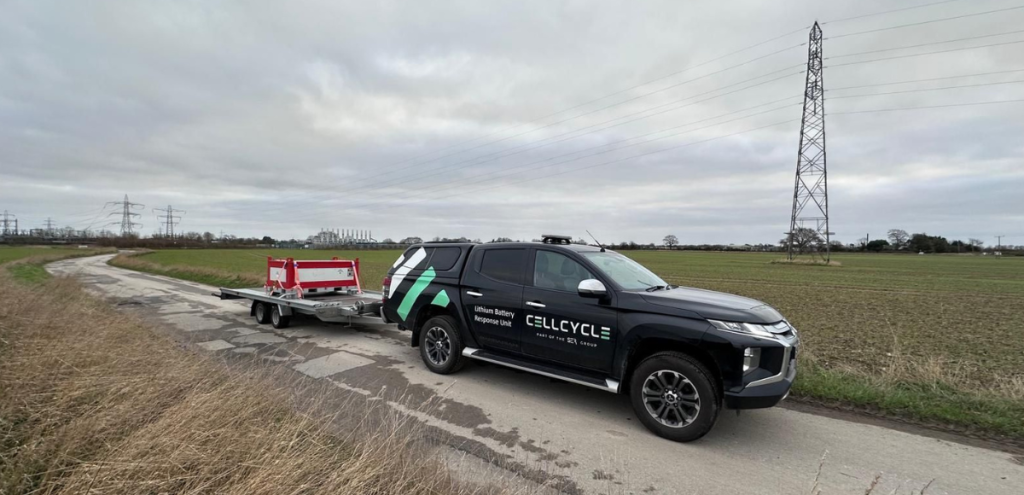
Cellcycle’s battery response service is built specifically for this category of material. The distinction matters: it is not standard collection with a hazard label attached, but an operation designed around the risk profile from collection through to licensed treatment.
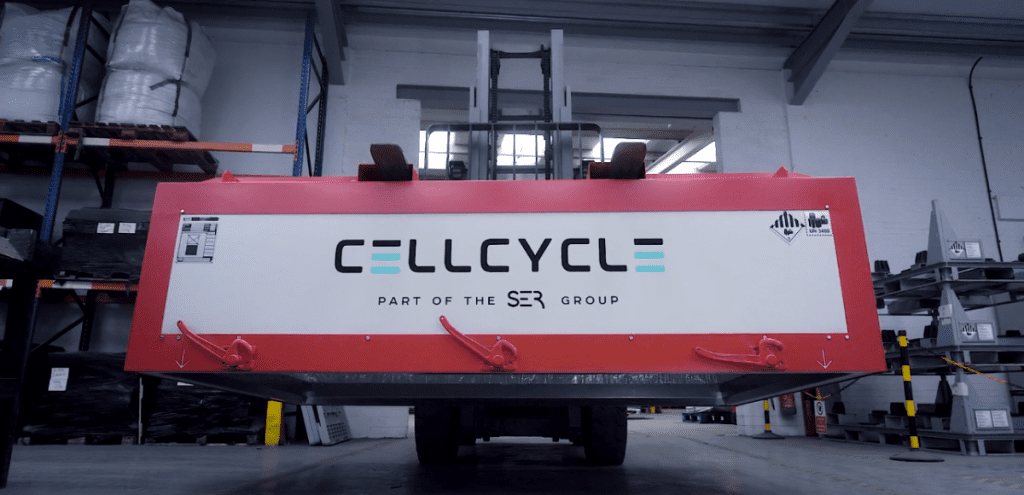
The fleet is ADR-approved, which is the baseline requirement for carrying damaged and defective lithium batteries lawfully. Collections are overseen by an in-house Dangerous Goods Safety Adviser, the role that the regulations expect to govern compliance across every movement. The team is equipped to collect all types of lithium-ion batteries, including damaged and unsafe material, and the technicians who handle high-voltage assets hold High Voltage Authorisation and IMI TechSafe accreditation for EV and hybrid battery work.
Each of those is a specific, verifiable capability rather than a claim of competence. Together they answer the practical question a damaged battery poses: who can assess it, package it, move it and document it, in a way that satisfies the regulation and the safety risk at the same time. The documentation matters as much as the handling, because compliant lithium battery disposal has to be demonstrable: a clear, evidenced account that the material was managed correctly from the point of collection through to licensed treatment.
Planning for the batteries that fall outside the schedule
Most battery assets will never need this. They will reach end of life in good condition and be handled through routine disposal. But across automotive, energy storage, healthcare and industrial operations, some proportion of material will not behave predictably, and those are the units that carry the risk.
The organisations that manage this well are the ones that have decided in advance who they will call when a battery is found damaged, venting or otherwise unsafe, rather than improvising under pressure with material that is already hazardous. Knowing the route exists, and that it is compliant and documented, is the difference between a controlled response and an incident.
If you are managing battery assets and have material that falls outside a standard collection schedule, find out more about Cellcycle’s battery response service.