When lithium-ion battery recycling is discussed, the conversation tends to centre on the large assets: electric vehicle packs and grid-scale energy storage. Those are the headline volumes. But lithium-ion packs are not exclusive to them. They power the cordless drill on every construction site, the tools in every maintenance workshop, and equipment across tens of thousands of UK sites and households.
These smaller packs are easy to forget precisely because they are small. That is also what makes them a quiet compliance problem. When a power tool battery wears out, it carries exactly the same disposal obligation as any other lithium-ion battery, and the route to meeting that obligation is less obvious than it is for a large asset.
The obligation does not scale with size
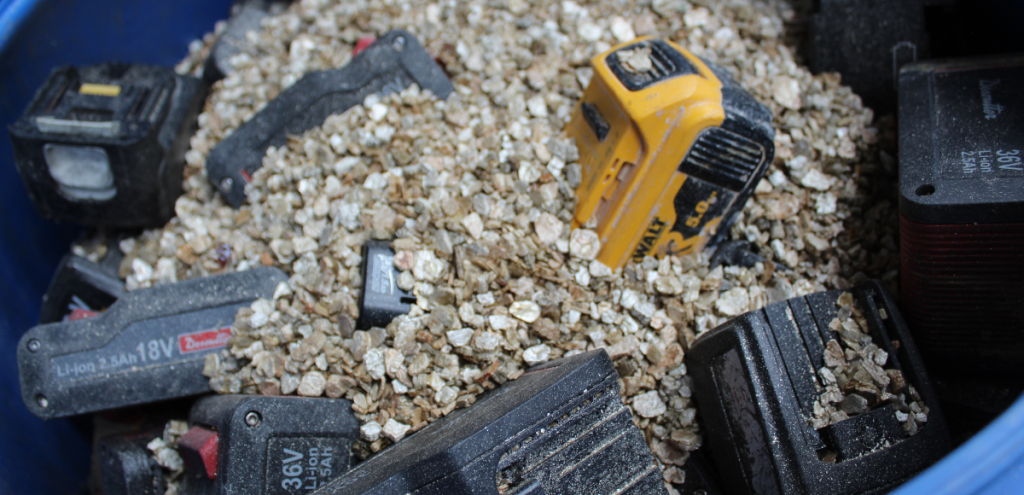
A spent 18V or 20V power tool pack is a waste lithium-ion battery. The law treats it as one. That means separate collection, compliant transport and treatment at a licensed facility, the same chain that applies to a far larger battery. Putting a power tool pack in general waste is non-compliant, regardless of how small it is.
The size is the trap. A single drill battery looks inconsequential, but the obligation attaches to each one. Across a busy site or a national estate, those individually minor items accumulate into a real volume of waste lithium-ion batteries that still has to go somewhere compliant.
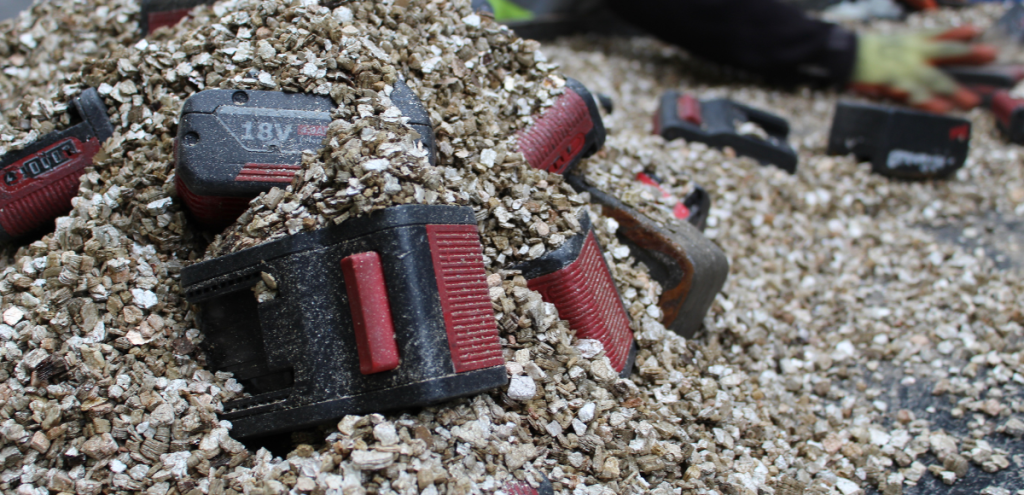
Why small batteries end up in the wrong place
The waste sector has been warning about this specific problem for years. Guidance from the Waste Industry Safety and Health (WISH) Forum, the HSE-endorsed body for the UK waste and recycling industry, identifies the rise of lithium batteries in everyday items including power tools, and warns that these batteries are not always disposed of through suitable facilities. Increasingly, it notes, they appear as rogue lithium batteries in general waste streams at waste transfer, recycling and recovery facilities, where they pose a significant fire risk.
The consequences of that are now well documented. The National Fire Chiefs Council recorded more than 1,200 battery fires in bin lorries and at waste sites across the UK in a single year, a 71% increase on the 700 recorded in 2022. When a small lithium battery is crushed or damaged in a waste vehicle or at a sorting facility, it can ignite, and lithium battery fires are difficult to extinguish and prone to reignition.
A power tool pack that slips into general waste is not a minor administrative lapse. It is a unit of fire risk introduced into a system that is not designed to contain it. For an organisation, it is also an unmet legal obligation sitting in plain sight.
The practical gap for organisations managing tools at volume
For most large assets, the disposal route is reasonably well understood. A decommissioned energy storage system or an end-of-life EV pack is a significant item that prompts a deliberate process. A drill battery does not. It is small enough to be overlooked and numerous enough to accumulate quickly, which is why, for organisations managing high volumes of power tools, end-of-life battery disposal often remains unsolved in practice.
The question is not whether these batteries need compliant recycling. They do, by law. The question is who provides a route that can take them, in the volumes a site or estate generates, with the compliance infrastructure that handling lithium-ion batteries requires.
The compliant route for power tool battery recycling
Cellcycle collects all types of lithium-ion batteries, including portable power tool packs, with the compliance infrastructure the job requires rather than as an afterthought to larger contracts.
Collections use ADR-approved vehicles and drivers, with an in-house Dangerous Goods Safety Adviser overseeing every movement, the standard that applies to transporting lithium batteries as dangerous goods. Material is processed across Environment Agency-permitted facilities with a combined permitted capacity of 80,000 tonnes per year. As an Environment Agency Approved Battery Treatment Operator and Approved Authorised Treatment Facility, Cellcycle provides the licensed, documented route that compliant disposal demands.
The documentation is part of the point. Compliant li battery recycling is not only about the material being treated correctly, but about being able to show that it was, from collection through to licensed treatment. For a site or estate carrying a duty of care over its waste batteries, that evidence trail is what turns a disposal arrangement into a defensible compliance position.
Whether you are managing a single site or a national estate, the route to compliance is the same. The packs are small, but the obligation, and the way to meet it, is not.
To arrange compliant collection and recycling of power tool batteries and other lithium-ion packs, find out more at cellcycle.co.uk.