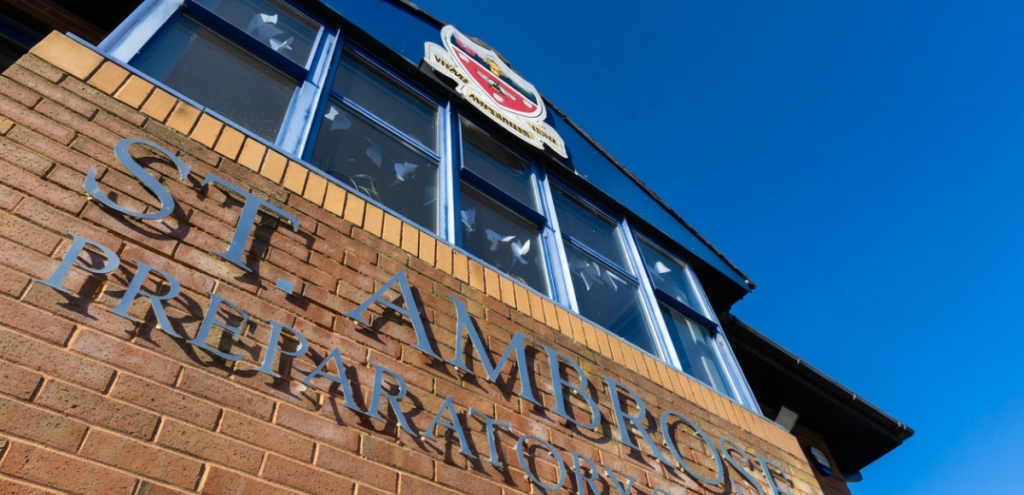
On Friday 20th June, Max Nagle, Head of Marketing and Communications at the SER Group, visited St Ambrose Preparatory School in Hale Barns, Altrincham, to speak to pupils about battery recycling, why batteries cannot simply be thrown away, and how the materials inside them can be recovered and given a new life.
St Ambrose Preparatory School is an independent Catholic co-educational school in Hale Barns, Altrincham, serving pupils from across Cheshire and Greater Manchester. Founded on the ethos of Edmund Rice and led by Headteacher Ms Sara Heron, the school provides education for boys and girls from nursery through to Year 8, with a curriculum designed to develop academic achievement alongside broader personal and social responsibility. St Ambrose is a member of the Independent Association of Prep Schools (IAPS) and holds strong inspection outcomes from the Independent Schools Inspectorate (ISI).
The visit formed part of Cellcycle‘s ongoing commitment to building broader public understanding of battery recycling and its place in the UK’s transition to net zero.
Why battery recycling belongs in education
The UK disposes of 600 million batteries every year. Most end up in landfill, buried in the ground, where the chemicals inside can leach into soil and water. The batteries in question range from household AA cells to the lithium-ion packs inside phones, laptops, and electric vehicles. What unites them is that none of them should end there.
The materials inside a battery are not waste. Zinc, manganese, lithium, cobalt, nickel, copper, and graphite are finite resources, all of them recoverable, and all of them with a second use, whether in new batteries, paint, or pharmaceutical applications. The environmental argument for responsible recycling is strong. The economic and industrial case is stronger still. Losing these materials to landfill is a choice, not an inevitability. Building a domestic recycling capability that can handle the volumes the energy transition will produce is as much a skills and awareness challenge as it is a technical one. Getting that understanding into classrooms is a practical step, not a symbolic one.
What the session covered
The session took pupils through the full lifecycle of a battery, from the raw materials it contains through to what happens when it reaches the end of its useful life. The risks of incorrect disposal were set out clearly: batteries in landfill can leak toxic chemicals into the soil and water, and degraded batteries in refuse vehicles are a genuine fire hazard. Pupils were then introduced to the Cellcycle process, from collection and safe transport through to shredding, material recovery, and the re-entry of those materials into new products. The session also covered how straightforward responsible disposal actually is. Collection points at supermarkets, libraries, and some schools mean that recycling a battery requires very little effort.
The session closed with a quiz and a challenge that put the scale of the problem in tangible terms. With 129 pupils in the room, if every one of them recycled a single battery that week, 129 batteries would be diverted from landfill before the following Friday. Small actions, taken consistently, are where the volume comes from.
Mrs. L. Ellis “We really appreciate the informative assembly that Cell Cycle delivered to our whole school. Max made the assembly fun, interactive, and informative for our children. Pupils learnt a lot about what is inside batteries, how they are recycled, and, most importantly, why battery recycling is important. This feeds into our school commitment to protecting the environment and being global citizens.”
“Speaking at St Ambrose was a genuinely encouraging experience. The level of engagement from the pupils showed that young people are already thinking seriously about sustainability, not as an abstract concept, but as something that connects directly to the technology in their hands every day. That curiosity is exactly what the industry needs from the next generation.” Max Nagle, Head of Marketing and Communications, the SER Group
Cellcycle’s position in the UK battery recycling supply chain
Cellcycle holds Environment Agency-approved treatment facilities with a combined permitted capacity of 80,000 tonnes per year. Its LithiumCycle™ process, developed through a Knowledge Transfer Partnership (KTP) with Coventry University, applies a bio-based refining route to recover cathode active material at a purity and yield that makes it viable for direct re-entry into battery manufacturing. A patent for its novel direct recycling process has been filed.
Cellcycle is the battery recycling division of the SER Group. For more information about Cellcycle’s Advanced Battery Recycling capabilities, visit cellcycle.co.uk.